


Main Steps in the Production of Blown Bitumen
Blown bitumen, also known as oxidized bitumen, is one of the most widely used types of bitumen in various industries, especially in waterproofing and the production of bituminous membranes. This type of bitumen is produced through a special industrial process from base bitumen (penetration bitumen), which alters its physical and thermal properties, making it more resistant to heat and deformation. In this article, we will simply review the main steps in producing blown bitumen.

1. Selection of Base Bitumen (60/70 or 80/100):
The production process starts with choosing the appropriate base bitumen. Usually, penetration bitumen with a specific grade is selected because it has the required fundamental properties.
2. Heating the Base Bitumen:
The bitumen is heated in special tanks to a temperature of about 240 to 270 degrees Celsius until it becomes fully liquid and fluid. Due to the high temperature, this step requires durable equipment and controlled conditions.
3. Air Blowing:
The most critical step is blowing air through pipes located at the bottom of the tank. Air is continuously injected under pressure into the hot bitumen. This process, which can last several hours, causes chemical reactions that change the molecular structure of the bitumen.
4. Changes in Physical Properties:
During blowing, the bitumen becomes stiffer and harder, its viscosity increases, and its softening point rises. These changes make the bitumen more stable against temperature and pressure. For example, blown bitumen graded 115/15 has a softening point of 115°C and a penetration grade of 15, indicating its hardness and stability.
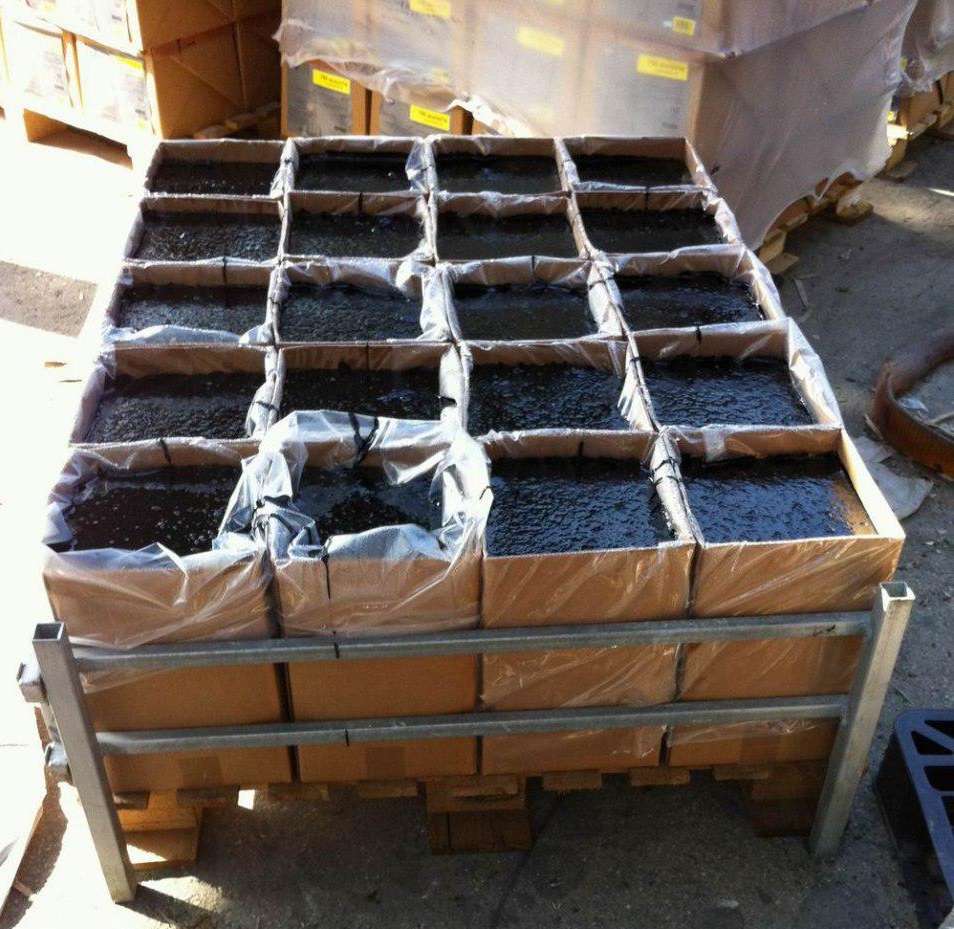
5. Cooling and Packaging:
After reaching the desired properties, the bitumen is removed from the tank and cooled. It is then packaged in metal drums or polypropylene bags, ready for domestic or export markets.
Due to its high durability, resistance to water and heat, and the ability to be produced in various grades, blown bitumen is a suitable choice for construction projects, waterproofing membranes, and coating tanks and pipelines. Precise control of production conditions and process steps directly impacts the final quality of the bitumen.
